Afternoon tea is one of those rituals that Britain has exported to the world and then, rather magnificently, managed to make a mess of domestically. Walk into the wrong tearoom and you will be handed a bag of Yorkshire Tea on a string, a triangle of slightly curled cucumber sandwich, and a scone that was almost certainly baked on Tuesday. Nobody needs that. The best afternoon tea experience UK venues offer is something categorically different, a considered ceremony that rewards patience, good company, and a willingness to slow down for two hours.
I have spent rather a lot of pleasant afternoons testing this theory. From the gilded rooms of Claridge’s to a quietly extraordinary hotel in the Scottish Borders, the gap between a genuinely superb spread and a passable one comes down to a handful of specifics that most establishments either understand entirely or miss altogether.
Why the tea itself is the first thing to judge
It seems almost too obvious to state, yet it is persistently overlooked: the tea at an afternoon tea must be extraordinary. A proper loose-leaf selection, not fewer than eight varieties, ideally twelve or more, signals that the kitchen takes the whole affair seriously. I would expect at minimum a first-flush Darjeeling, a Taiwanese oolong, a smoky Lapsang Souchong for the adventurous, and a floral Earl Grey made with proper bergamot rather than synthetic flavouring. The UK Tea and Infusions Association notes that loose-leaf consumption has risen steadily amongst premium hospitality venues, which suggests the best of them have heard the message.
The brewing matters just as much as the selection. Water temperature, steep time, and the quality of the pot itself (silver plate versus heavy ceramic versus a flimsy stainless vessel) all contribute to what lands in your cup. Somewhere like The Ritz in London still serves from their own branded blends, brewed in warmed silver pots and refreshed without being asked. That attention is not fussiness. It is the difference between tea as backdrop and tea as the actual point.
Sandwiches: restraint is the mark of excellence
The savoury course arrives first, and this is where many establishments expose themselves. Too much bread relative to filling is the cardinal sin. The sandwich should be three bites at most, a generous three bites, mind, with the filling flush to the edges and made the same morning. Classic combinations hold for good reason: smoked salmon with crème fraîche and dill on brown; egg mayonnaise with cress on white; rare roast beef with horseradish on granary. What I find tiresome are the modern attempts to reinvent the form entirely. A sandwich flavoured with truffle foam and micro-herbs served on activated charcoal bread is not a sandwich. It is a chef losing the plot.
Four varieties is the minimum I expect at a serious sitting. Five or six, with at least one that changes seasonally, tells you the kitchen has genuine investment in the menu rather than something laminated and unchanged since 2019.
Patisserie: where the kitchen either earns its reputation or squanders it
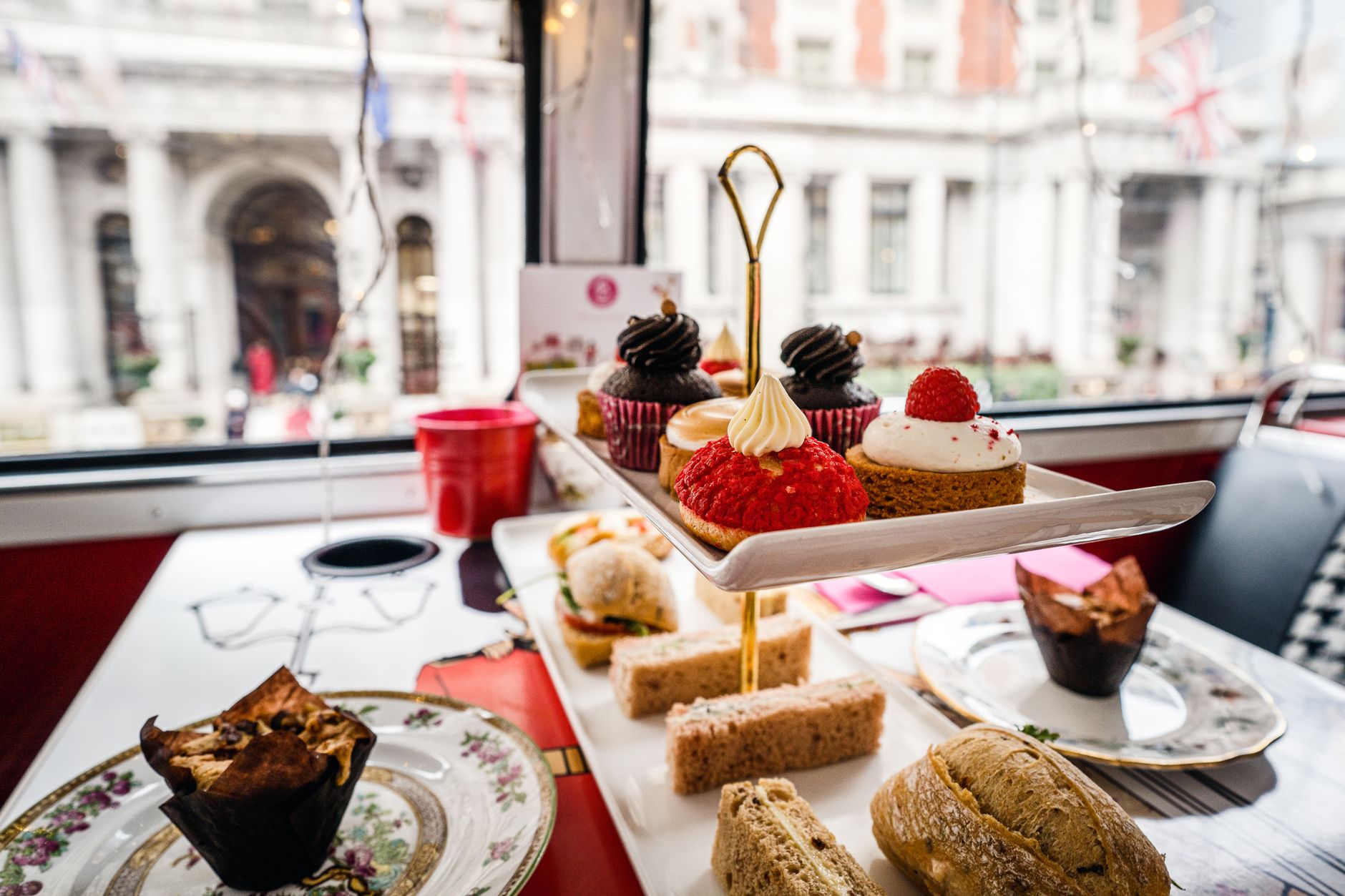
The upper tier of a traditional three-tier stand holds the pastries, and this is unquestionably where a kitchen shows its ambitions. Properly made choux, light, dry-shelled, generously filled, takes skill and timing. A well-tempered chocolate tart with a biscuit base that shatters cleanly is harder to achieve than it looks. I have eaten fruit tarts at celebrated London hotels where the pastry cream tasted faintly of cornflour; that is inexcusable at £65 per head.
The scone question is its own chapter. It should arrive warm, ideally straight from the oven or at least rested no more than forty minutes. The crumb ought to be tender but with enough structure to split cleanly by hand. Clotted cream, Cornish or Devonian, it matters less than quality, should come in a quantity that does not require rationing. Jam should be homemade or from a named artisan producer. If I see a branded miniature jam jar from a supermarket range on the table, I know immediately that corners are being cut elsewhere too.
The best afternoon tea experience UK has produced, in my view, is one where the patisserie changes weekly and the pastry chef is credited on the menu. That detail tells you everything about the kitchen’s confidence.
Setting and service: the intangibles that actually define the visit
A beautiful room matters enormously. I am not apologising for that. There is a reason that Palm Court at The Langham, the Drawing Room at Balmoral in Edinburgh, and the restored tearoom at Chewton Glen in Hampshire all carry reputations that extend far beyond their immediate regions. High ceilings, natural light, comfortable chairs at the right height relative to the table, linen that is properly pressed, china with some weight and history to it, these things accumulate into an atmosphere that makes the two hours feel like an occasion rather than a transaction.
Service, though, is what either sustains or collapses the whole experience. The ideal is knowledgeable without being scripted, a member of staff who can speak fluently about the tea menu, who notices when a pot needs refreshing, who times the replenishment of sandwiches without you having to ask, and who reads the table well enough to know when to disappear. Hovering is as bad as neglect. I have sat at tables in well-regarded venues where I was asked four times in twenty minutes whether everything was satisfactory. It was not, by the end of it.
What genuinely exceptional venues have in common
Consistency is the thread that runs through the best of them. A hotel that delivers a remarkable afternoon tea on a Tuesday in February and an identical one on a Sunday in August during peak season has achieved something genuinely difficult. That requires kitchen discipline, good supplier relationships, and a head of service who trains staff properly rather than leaving them to improvise.
Price, I should say, is not the reliable indicator that many assume. I have paid £90 per person at a Mayfair address and left mildly irritated, and I have paid £38 at a country house hotel in Derbyshire and left entirely content. The figures that matter are the ratios: how much of the price lands on the plate, and how much is simply renting the postcode.
The ritual of afternoon tea at its finest is a genuinely civilised thing, unhurried, generous, grounded in craft. Britain invented it, which means Britain has both the right and the responsibility to do it properly. The venues that understand this are worth seeking out. The ones that do not are, frankly, worth avoiding entirely.
Frequently Asked Questions
What makes the best afternoon tea experience UK hotels offer different from a standard tearoom?
The finest hotel afternoon teas distinguish themselves through loose-leaf tea programmes with ten or more varieties, freshly prepared patisserie, and service staff trained to anticipate rather than react. A standard tearoom tends to offer bagged tea, pre-made sandwiches, and minimal personalisation. The gap in quality is usually immediately apparent.
How much should I expect to pay for a high-quality afternoon tea in the UK?
At a reputable city hotel such as Claridge’s or The Langham in London, expect to pay between £70 and £100 per person, often excluding alcohol. Outside London, excellent afternoon teas at country house hotels typically range from £35 to £60 per person. Price alone is no guarantee of quality, focus on reviews that specifically mention freshness and tea selection.
Should scones be served warm at afternoon tea?
Yes, unequivocally. A scone served at room temperature or cold has usually been baked hours in advance and left to sit, which compromises both texture and flavour. The best venues bake in batches throughout service so scones arrive warm, with the crumb still tender. If yours arrive cold, it is a reasonable indication that the kitchen has prioritised convenience over quality.
What is the correct order to eat an afternoon tea, sandwiches first or scones first?
Traditionally, the savoury sandwiches come first, followed by scones with clotted cream and jam, and finally the sweet pastries. This order moves from savoury to sweet and allows you to properly appreciate each tier. Most good establishments will confirm this sequence when presenting the stand.